


Tanah Merah
Art Resort
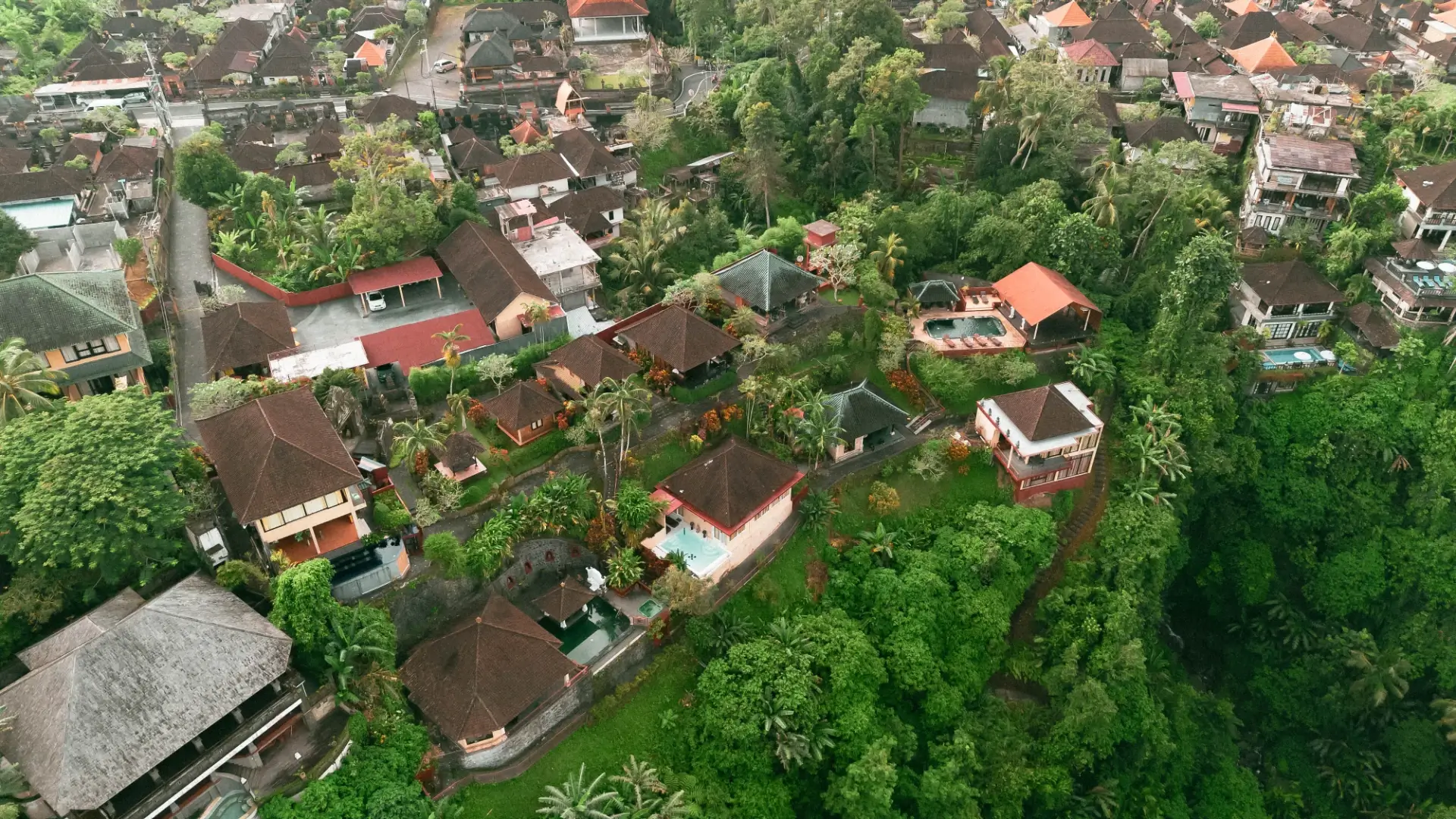
Tanah Merah Art Resort was created from a vision that a place to stay could become more than a temporary retreat. It could become a living space where art, history, architecture, and nature exist together. Unlike a conventional resort concept that focuses only on comfort and accommodation, Tanah Merah was designed as an artistic sanctuary where every corner carries a story about Indonesia’s cultural richness.
The foundation of this vision came from Dr. Peter Bloch, a Danish born collector and humanitarian who spent decades building a connection with Indonesia. His lifelong appreciation for Indonesian art, antiques, and traditional craftsmanship became the inspiration behind the creation of Tanah Merah Art Resort.
Established in 1996, Tanah Merah began as a personal expression of appreciation toward Indonesian heritage. The resort was developed above the Petanu River gorge near Ubud, a location chosen not only because of its natural beauty but also because of its connection with the artistic spirit that has long defined the region.
The story of the founder and the beginning of Tanah Merah can be found through the internal page about the Tanah Merah founder.
The name Tanah Merah carries a meaning that reflects the spirit behind the resort. Translated from Indonesian, Tanah Merah means Red Earth.
The meaning goes beyond the physical characteristics of the land. Red earth represents the foundation of life, connection, and cultural roots. It reflects the relationship between people and the land that has shaped Indonesian traditions for generations.
For Tanah Merah Art Resort, the name represents the energy of Indonesian culture flowing through its architecture, artwork, and surroundings. The warm tones found throughout the property reflect the natural colors of Bali while creating a connection between the landscape and the artistic collections displayed throughout the resort.
The name also represents a philosophy that heritage is something alive. It is not only preserved in museums or historical records but can also exist through daily experiences, spaces, and human interaction.
Creating Tanah Merah was a long journey that required patience, commitment, and a deep understanding of Indonesian heritage.
One of the challenges was transforming a natural jungle landscape into a resort while maintaining the character of the environment. The goal was not to replace the surroundings but to create a space that could exist harmoniously with the forest, river valley, and local atmosphere.
Another challenge was integrating thousands of collected artworks, antiques, and cultural objects into a hospitality environment. Each piece needed careful consideration because they represented different regions, traditions, and historical periods across Indonesia.
The result was a resort where accommodation became part of a larger cultural narrative. Villas, studios, restaurants, and common areas were designed with individual identities, allowing guests to experience different stories within the same property.
The artistic philosophy behind these spaces can also be seen through the internal page about Tanah Merah accommodations and its heritage inspired living spaces.
One of the most significant historical connections within Tanah Merah is the story of Mads Johansen Lange.
Known as the Bali Trader and Peacemaker, Mads Lange was a Danish merchant who lived in Bali during the 19th century. His relationships with Balinese kingdoms and international traders made him an important figure in the history of Bali’s economic and cultural exchanges.
The fascination with Mads Lange’s story became a major research journey. Through years of collecting information, studying historical references, and preserving forgotten materials, Tanah Merah developed a deeper connection with his legacy.
This journey eventually led to the creation of the book Mads Lange, The Bali Trader and Peacemaker and His Forgotten Treasures. The publication aimed to introduce the wider public to the story of a historical figure whose influence shaped part of Bali’s development during the 1800s.
The book later gained international attention and became part of the cultural presentation connected with the G20 period in Bali. This moment represented an opportunity to share Indonesian history and the story of cultural connections between Bali and the wider world.
The Mads Lange story is also reflected in one of Tanah Merah’s signature accommodations, the Mads Lange Villa, which continues to preserve this historical connection within the resort.
As the collection continued to grow, the vision behind preserving Indonesian heritage expanded beyond Tanah Merah.
The number and diversity of historical objects created a need for a dedicated space where these collections could be presented with greater depth. This became the reason behind establishing Museum P.B.C. Tabanan.
The museum was created to provide a more suitable environment for preserving and presenting historical collections. It represents the continuation of the original mission of Tanah Merah, which is protecting and sharing Indonesia’s artistic and cultural heritage.
Moving the collection into a dedicated museum allowed the objects to receive a more focused presentation while giving visitors a deeper understanding of their historical importance.
Although a significant part of the collection was moved to Museum P.B.C. Tabanan, the artistic identity of Tanah Merah remains an essential part of the resort experience.
Visitors can still encounter selected artworks, antiques, traditional decorations, and heritage elements throughout the property. These pieces continue to shape the atmosphere of the villas, studios, restaurants, and public areas.
The difference is that the museum provides a dedicated historical setting, while Tanah Merah continues to represent a living interpretation of Indonesian art within a hospitality environment.
The resort remains connected to its original philosophy that art should not only be observed but also experienced. Every architectural detail, antique element, and cultural reference continues to tell part of the larger Tanah Merah story.
The history of Tanah Merah Art Resort is a story about passion, preservation, and respect for Indonesian culture. What began as a personal collection and artistic vision developed into a place where hospitality and heritage meet.
From the meaning behind its name, the journey of preserving Mads Lange’s forgotten history, to the establishment of Museum P.B.C. Tabanan, Tanah Merah represents a continuous effort to protect cultural stories and share them with future generations.
Today, Tanah Merah remains a place where nature, art, and history exist together, creating a unique reflection of Indonesia’s heritage in the heart of Ubud.
