


Tanah Merah
Art Resort
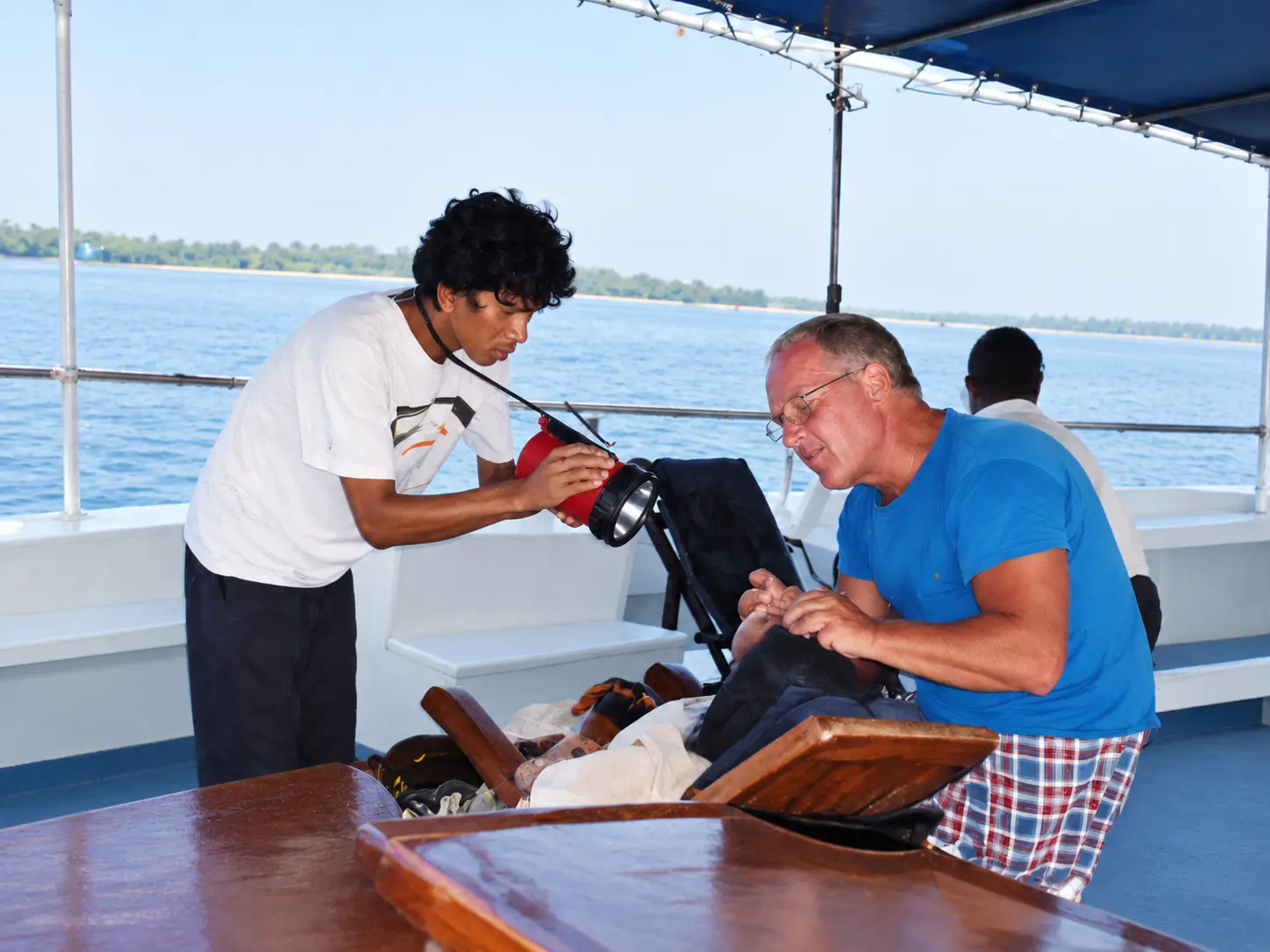
Dr. Peter Bloch is a Danish dentist known as the jungle dentist for his dental work in remote parts of Indonesia. Through journeys with Katharina Sailing to Timor, Toraja, Sumba, Komodo, Palu, and Sulawesi, he helped local communities with dental fillings and manual dental scaling when electricity and modern equipment were limited. His travels also shaped his respect for Indonesian cultural objects, from Toraja carvings and Sumba ikat textiles to shipwreck porcelain and traditional architecture. Rather than accepting these objects as gifts, he chose to buy them, believing that care should be given sincerely and cultural heritage should be valued properly.
Before Dr. Peter Bloch became known as a collector of Indonesian art, he was first a dentist who spent much of his time helping people in places where dental care was difficult to access.
His connection with Indonesia grew through travel, direct contact with local communities, and years of personal experience. He did not only visit well known destinations. He went further into remote areas, especially around eastern Indonesia, where medical access was often limited.
Through Katharina Sailing, he traveled across islands and coastal regions, including Timor, Toraja, Sumba, Komodo, Palu, and Sulawesi. These journeys were not built around comfort or convenience. They brought him closer to people who needed practical help, especially dental care.
For many communities, his arrival mattered. People would wait in line to receive treatment. Some came with dental pain. Some needed fillings. Others needed scaling to clean their teeth. In places where electricity was limited, modern dental machines were not always possible to use. Dr. Bloch worked with manual tools, medicine, and equipment he brought from Denmark.
This was how he became known as the jungle dentist.
The name jungle dentist may sound unusual, but it reflects a real part of Dr. Bloch’s life. He provided dental care in places far from standard clinics, often with limited infrastructure and basic conditions.
His work focused on simple but important treatments. He helped with dental fillings and manual dental scaling. These procedures may seem ordinary in a modern dental clinic, but in remote areas they could make a serious difference.
Dr. Bloch understood that dental problems should not be ignored. Tooth decay, gum problems, and untreated infections can affect more than the mouth. A dental infection can spread and become dangerous if left untreated. This belief shaped his commitment to dental care and oral health education.
He did not only treat people. He also reminded them of the importance of keeping teeth clean and taking dental problems seriously.
His work required patience, precision, and trust. It also required humility. He often worked without the comfort of a complete dental setup. Manual scaling took time. Dental fillings needed care. Every treatment depended on steady hands and full attention.
Later in life, when his hands were no longer as stable as before, Dr. Bloch made the decision to stop his work as a traveling dentist. For him, this was a matter of responsibility. Dentistry requires accuracy. A small mistake can affect a patient. His decision to stop showed the same care that had guided his work from the beginning.
One of the most important parts of Dr. Bloch’s story is not only that he helped people. It is how he understood help.
During his travels, people sometimes wanted to give him cultural objects or old belongings as a form of gratitude. These objects included carvings, textiles, and other pieces connected to local heritage. Dr. Bloch did not want to accept them as gifts.
He believed that if his purpose was to help, then the help had to remain sincere. It should not turn into a personal exchange. At the same time, he believed that cultural objects and works of art should be respected. They had value, history, and meaning.
Because of that, he chose to buy them.
This principle became central to the way he collected. He did not see these objects as souvenirs. He saw them as part of Indonesian cultural heritage. Buying them was his way of recognizing their value and respecting the people who owned them.
His collection grew from this attitude. It was shaped by direct encounters, not by distance. Each object carried a place, a memory, and a human connection.
Dr. Bloch’s Indonesian art collection was not formed in one moment. It grew over many years of travel, service, and personal relationships across Indonesia.
From Toraja, he collected wood carvings and traditional figures connected to local culture. These objects reflect the strong visual identity of Toraja, where carving, architecture, and ancestral traditions hold deep meaning.
From Sumba, he collected textiles, including Sumba ikat textiles. Ikat is one of Indonesia’s most important textile traditions. Its patterns are created through a careful process of tying and dyeing threads before weaving. These textiles are not only decorative. They carry stories, symbols, and local knowledge.
He also collected shipwreck porcelain, including pieces connected to Palu and Sulawesi. These objects point to Indonesia’s long maritime history, where trade routes, coastal settlements, and sea journeys shaped cultural exchange for centuries.
His collection also includes architectural pieces. Among them is a traditional Tuban house said to be more than 300 years old. There are also Balinese doors from the Royal Palace of Singaraja. These pieces show his interest not only in small objects, but also in the structure, craftsmanship, and atmosphere of traditional spaces.
Over time, his collection expanded to include paintings, antiques, furniture, textiles, porcelain, carvings, and cultural objects from different parts of Indonesia.
What connects them is not one style or one region. What connects them is Dr. Bloch’s way of seeing. He collected through contact, care, and respect.
Dr. Bloch’s journeys were not only marked by people and objects. They were also marked by companionship.
One of the most personal stories from his travels is about Manis, a Yellow Crested Cockatoo. Manis had been captured by people in a remote area and was in poor condition. The bird was sick and suffering when Dr. Bloch found it.
He bought Manis, cared for the bird, and helped it recover. From around 1996, Manis became part of his journey.
This detail may seem small compared to the larger story of dental work and art collecting, but it reveals something important about Dr. Bloch’s character. His care was not limited to patients. It also appeared in the way he responded to suffering around him.
Manis became more than a bird he rescued. It became part of the memory of his travels, a quiet presence in a life shaped by movement, care, and attachment.
As the years passed, Dr. Bloch’s work as a jungle dentist gradually shifted. Age changed what he could do. His hands, once steady enough for precise dental work in difficult conditions, began to lose some stability.
He understood the risk. Dental care needs precision. Rather than continuing when he felt he could no longer work at the same standard, he chose to stop.
But his connection with Indonesia did not end. It changed form.
The objects he had collected through years of travel became part of a larger personal world. They were not stored away as silent possessions. They became part of the atmosphere around him.
Tanah Merah Art Resort later became one of the places where Dr. Bloch gathered the objects, memories, and values shaped by those journeys. Located in Ubud, Tanah Merah reflects more than a visual concept. It reflects a life spent moving between islands, meeting people, helping communities, and paying attention to the cultural objects he encountered along the way.
The resort’s art, architecture, textiles, antiques, and natural setting are connected to that personal history. They do not stand apart from Dr. Bloch’s story. They help carry it.
Tanah Merah should not be understood only as an art resort. It is also a place shaped by memory.
The objects found there are connected to years of travel across Indonesia. Some came from remote areas. Some came from maritime history. Some came from traditional houses, palaces, and local communities. Together, they create a setting where art and personal history meet.
For Dr. Bloch, collecting was never only about ownership. It was about recognition. He believed cultural objects should be valued, not taken lightly. This belief came from the same principle that shaped his dental work: people and their heritage deserve respect.
That is why his story matters.
Dr. Peter Bloch’s life cannot be reduced to one title. He was a dentist, a traveler, a collector, and a man who spent years building relationships with people and places across Indonesia. His work as the jungle dentist showed his concern for health. His collection showed his respect for culture. Tanah Merah became one expression of both.
In the end, the story of Dr. Peter Bloch is not only about a Danish dentist who collected Indonesian art. It is about a person who encountered Indonesia through service first, then carried those encounters into a life surrounded by objects, memories, and meaning.
