


Tanah Merah
Art Resort
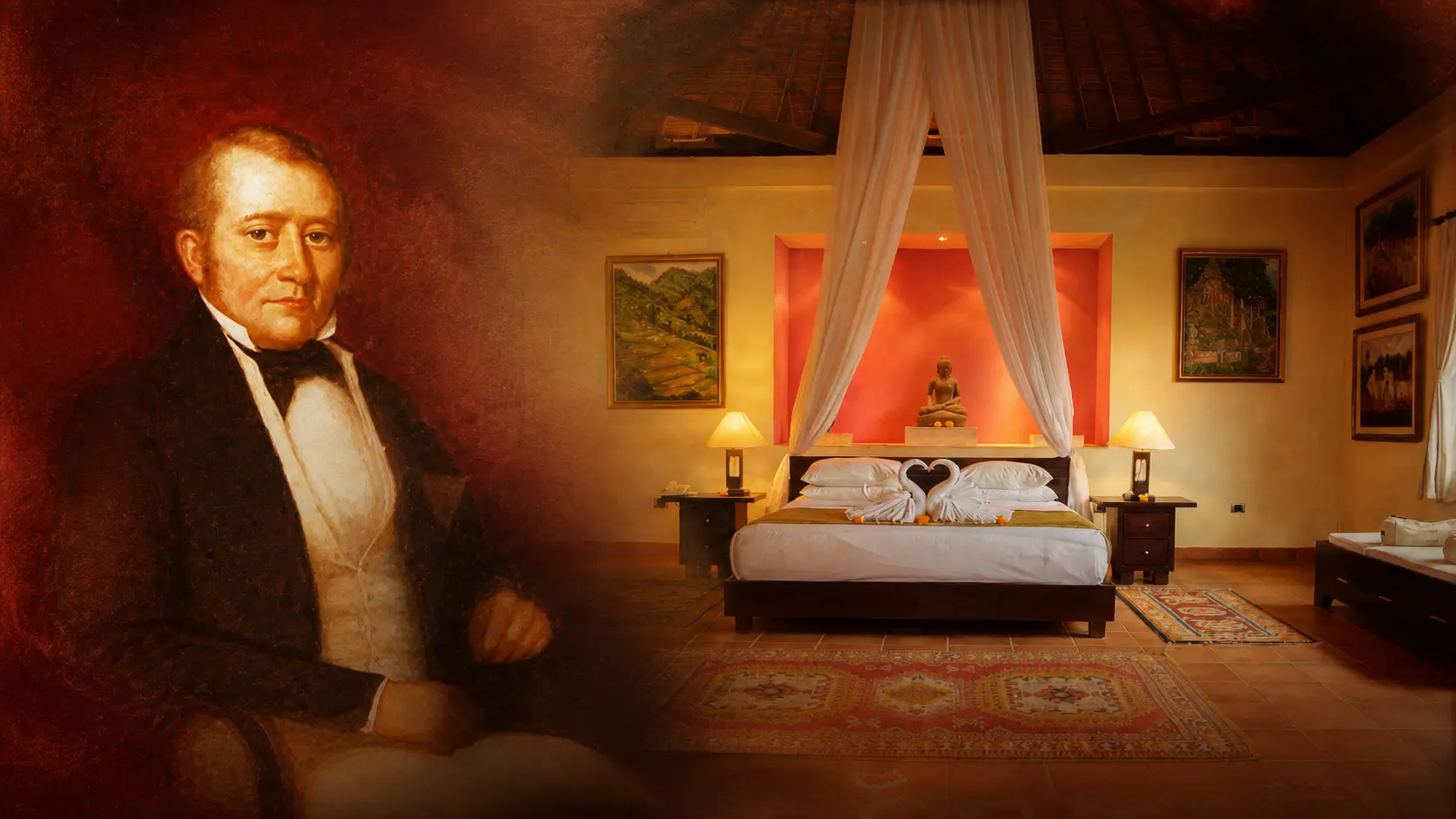
Mads Johansen Lange earned the title Knight of the Dutch Lion because he became the rare person who could stand between two sides and help them stop fighting. While the Dutch invasion pressed Bali hard, Lange used decades of trade connections, cultural respect, and personal credibility to broker a truce that protected Balinese freedom for years.
Lange was born in Denmark and left at the age of 26. In 1833 he sailed for Hong Kong with his brothers and a close friend, then started searching for opportunities across the Indonesian archipelago. He first focused on Lombok, likely drawn by its strong rice production and its strategic position in regional trade.
At that time, Lombok was shaped by rivalry between two powers, Mataram-Lombok in the north and Karangasem-Lombok in the south. Karangasem welcomed Lange. He earned trust as a trusted adviser and harbor chief, eventually receiving an unusual level of influence over trade. But competition soon arrived in the form of George Peacock King, aligned with Mataram-Lombok. The conflict between the kingdoms intensified, and by 1839 Karangasem-Lombok fell. Lange escaped with only essential possessions, his horse, and his ship.
That escape marked the beginning of Lange’s most influential chapter in Bali. In Kuta, the Kesiman ruler granted him land to build a house, factory, warehouses, and trading facilities. Lange arrived with a flamboyant personal style and deep respect for local customs, which made rajas more willing to listen to him. He also lived as an expat in full view of island society, with European comforts and a network of people that supported large-scale shipping and commerce.
Over time, he became more than a trader. He became a mediator. During the Dutch push into Bali in the 1840s, Lange used his relationships to facilitate communication between the Dutch and South Balinese rajas, offering practical proposals that both sides could accept.
Lange’s influence rested on two strengths: economic power and trust. Through his ships, he moved goods and helped connect islands through commerce. He gathered rice, coconut oil, animals, cotton, tobacco, coffee, and other products, then sold them through his warehouses. When the Dutch conflict disrupted regional shipping, Lange’s role became even more visible because he understood the cost of war to trade, food supply, and daily stability.
When the Dutch invaded in 1846, 1848, and 1849, the situation escalated quickly. A blockade tightened the pressure, and the hardship affected harvests and exports. In this tense environment, Lange worked as a shuttle diplomat. His goal was not simply to persuade one side, but to reduce the damage to everyone by creating a pathway to restraint.
The turning point came in mid-1849, when Lange brokered a historic truce. The agreement was signed at his house on 15 July 1849. For Balinese leaders, this mattered because it helped preserve autonomy and prevented immediate collapse. For the Dutch, it mattered because it offered an operational pause during a costly campaign.
It is after this achievement that the Dutch honored him. Lange later received the formal recognition associated with the Knight of the Dutch Lion, reflecting how seriously the Dutch authorities valued his mediation.
Sadly, peace did not end uncertainty forever. After the blockade and epidemics weakened his business and the Dutch shifted focus toward ports like Singaraja, Lange planned to leave Bali. He fell violently ill after a banquet and died in 1856. His legacy, however, endured through memory, family lines, and modern efforts to preserve his story.
If you want the full journey from Lange’s adventures to how his life ended and how his memory is commemorated, read more about A Tribute to Mads Lange.
To understand why Lange’s life became story worthy, it helps to see how modern Bali keeps his presence alive through art, design, and memory. If you want a firsthand atmosphere shaped by paintings and architecture inspired by Lange’s world, book Mads Lange Villa at Tanah Merah Art Resort.
