


Tanah Merah
Art Resort
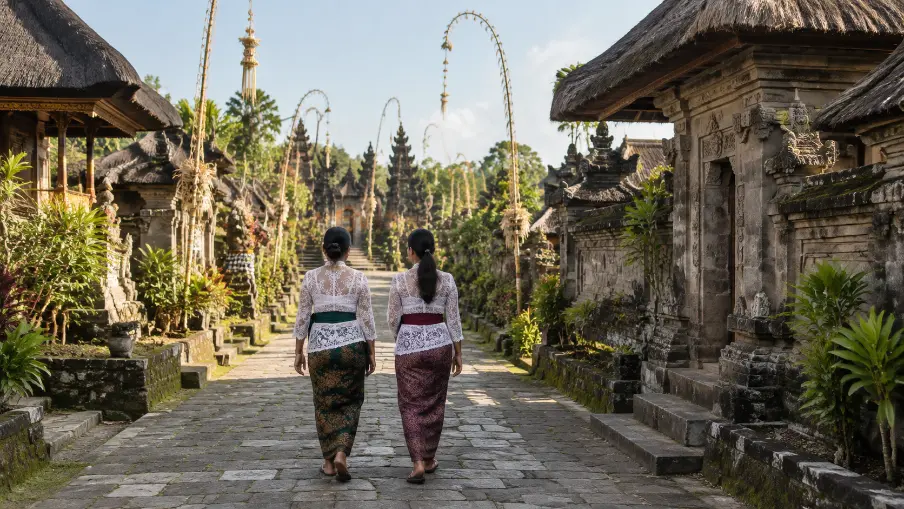
Melayang Village offers a closer look at Balinese life beyond the island’s busy visitor areas. Set above the Petanu River gorge near Ubud, this small village is where Tanah Merah Art Resort is located, surrounded by a rainforest valley and the rhythms of a local community. A guided walk introduces guests to everyday activities, religious events, and family life rather than presenting culture as a performance arranged for visitors. It is a meaningful option if you want to understand Bali by slowing down and spending time where people live, rather than rushing between attractions.
The village’s name is said to mean “soaring” or “flying”, a reference to its elevated position above the river gorge. The scenery is part of the experience, but the people give the landscape its character. A village walk can reveal how homes, shared spaces, places of worship, and the surrounding environment form part of a connected way of life. The experience is less about ticking off a landmark and more about noticing what makes a Balinese community distinctive.
Balinese culture is closely connected to family, spirituality, and community cooperation. In many communities, the banjar acts as a neighbourhood organisation where residents coordinate ceremonies, support family events, care for shared spaces, and make local decisions. Community halls can also become places for preparing offerings, rehearsing music, or teaching traditional dance. These activities are not simply cultural displays; they help maintain social relationships and shared responsibilities.
In Melayang, the resort’s village experience introduces visitors to this everyday rhythm through local guides. Depending on the day, you may hear about household routines, religious observances, or preparations for a family or community occasion. The visit also includes a Balinese lunch at a family home, offering a personal context for local food and hospitality. As these are real homes and religious spaces, visitors should follow the host’s guidance rather than treating private life as an attraction.
Ubud and its neighbouring villages are associated with Balinese painting, woodcarving, metalwork, stone carving, music, and dance. Melayang offers a different kind of cultural encounter, shaped less by a single craft specialty than by the artistic details woven into everyday and religious life. Offerings made from natural materials, ceremonial textiles, carved architectural elements, and decorations prepared for important occasions show how creativity can carry spiritual and social meaning. When music or dance practice is taking place, it may offer another glimpse of how artistic skills are passed between generations.
This is one reason a village visit can feel different from walking through a gallery. Art is not always separated from ordinary life or presented as an object for sale. It can appear in an offering, the pattern of a cloth, the design of a family compound, or the sound of a community rehearsal. Visitors who take time to ask questions and observe respectfully may gain a richer understanding of the relationship between Balinese craftsmanship, belief, and community identity.
Morning after breakfast is a practical time to visit because Tanah Merah Art Resort arranges its village walk during this part of the day. A local guide can explain the surroundings and what is happening during the visit. However, there is no fixed day when a particular ceremony is guaranteed. Temple anniversaries, known as odalan, follow the Balinese Pawukon calendar, and each temple has its own schedule.
If seeing a ceremony matters to you, ask the resort before arrival whether a public observance is expected and whether visitors may respectfully watch. Some rituals are private or have restricted areas, and ceremonies should never be treated as performances arranged for tourists. Wear modest clothing, follow your guide’s instructions, ask before taking photographs, and give worshippers and processions space. Nyepi is a day to avoid scheduling a village walk because movement and outdoor activities across Bali are restricted for the Day of Silence.
Tanah Merah Art Resort is a natural base for this experience because it is located in Melayang above the Petanu River gorge, close to Ubud yet removed from the busiest parts of town. Its village walk is led by local guides and connects guests with daily life, religious traditions, and a family meal. The resort also brings Indonesian heritage into its architecture, art collection, and gallery spaces. This creates a balance between understanding the local community and spending time with the wider artistic heritage of the archipelago.
For travellers who want more than a scenic stay, the combination is valuable because the cultural experience begins outside the resort gates and continues through the spaces they return to. You can spend the morning learning about village life, then return to a setting shaped by art, nature, and Indonesian history. To understand the route and what the visit includes, read the Melayang Village experience at Tanah Merah Art Resort before planning your stay.
