

Tanah Merah
Art Resort
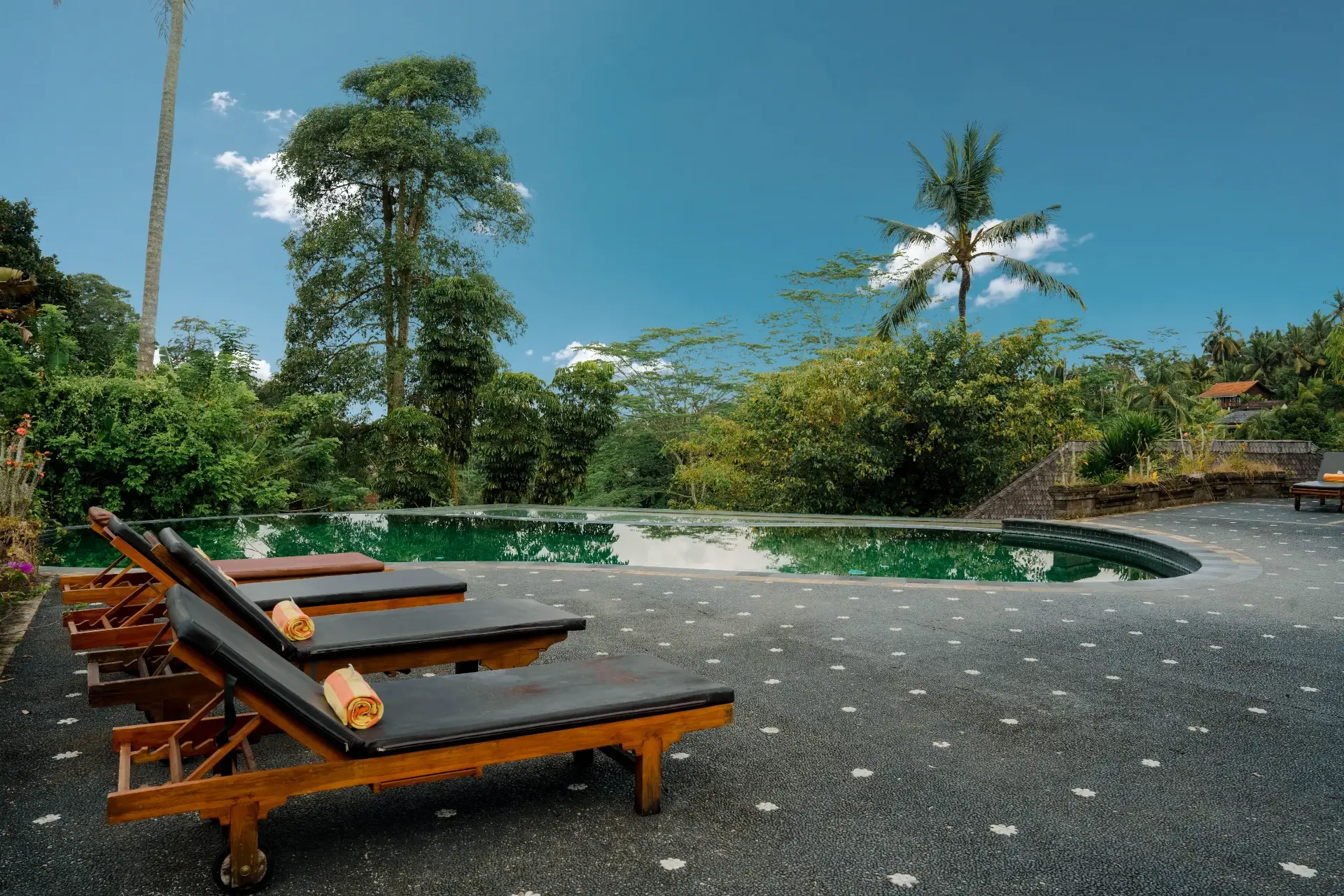
Tanah Merah Art Resort Ubud is designed as more than a place to stay. It is a living landscape where Balinese architecture, Indonesian art, tropical nature, and private villa spaces are connected through a carefully arranged environment. Instead of creating one large hotel building, the resort uses separate villas and facilities that blend with the surrounding forest, valley, and Petanu River landscape. This approach creates a slower and more personal experience where guests feel connected to Bali’s cultural and natural character.
For travelers who are looking for an accommodation experience that feels different from a standard resort, understanding the design philosophy behind Tanah Merah helps explain why the property feels like an artistic village rather than a conventional hotel.
The layout of Tanah Merah Art Resort follows a clustered design approach. The villas and facilities are placed separately throughout the landscape instead of being concentrated into one large structure. This creates privacy while allowing each area to have its own atmosphere.
The concept reflects the traditional Balinese way of organizing space. In many Balinese compounds, different functions are separated into individual structures connected by gardens, pathways, and open spaces. The relationship between buildings and nature becomes as important as the buildings themselves.
At Tanah Merah, this idea appears through:
The resort currently features various accommodation types and facilities, including artistically designed villas, galleries, restaurants, pools, a spa, and spaces overlooking the Petanu River gorge.
One of the defining characteristics of Tanah Merah is the combination of hospitality with art. The resort incorporates Indonesian artworks, antiques, textiles, and decorative elements throughout its spaces.
The cultural expression can be seen through several elements:
The separation between private villas and communal facilities reflects the idea that each space has a specific role. A villa becomes a personal retreat, while restaurants, galleries, and gathering spaces become areas for interaction.
The use of wood, stone, tropical gardens, and traditional decorative details creates a connection with Bali’s architectural identity. These elements help the buildings feel integrated with the environment rather than placed separately from it.
Unlike resorts where artwork is only used as decoration, Tanah Merah places art as part of the overall atmosphere. The galleries and collections create a connection between the guest experience and Indonesia’s artistic heritage.
Public information about Dr. Peter Bloch’s personal decision-making process for choosing the location is limited. However, the characteristics of the site provide several reasons why the area is suitable for an art resort concept.
The Melayang area near Ubud offers a combination of natural scenery and cultural surroundings. The resort is positioned above the Petanu River gorge, surrounded by tropical vegetation and views of the valley.
This location supports several experiences:
The river, forest, and valley create a natural setting where guests can experience Bali beyond urban tourism areas.
Ubud has long been associated with Balinese arts, traditional crafts, and cultural activities. Placing an art-focused resort near Ubud creates a connection between accommodation and the surrounding cultural environment.
The Petanu River is not treated only as scenery. It becomes part of the atmosphere through sound, views, and the feeling of being surrounded by nature.
There is limited public documentation describing specific environmental strategies implemented by Dr. Peter Bloch. However, the resort’s spatial approach shows several principles commonly associated with landscape-sensitive design.
Instead of creating a large flat development area, the resort uses separate structures placed within the existing landscape. This reduces the need to completely transform the natural setting.
The distance between villas allows vegetation to remain part of the guest experience. Trees, gardens, and natural views become active parts of the design.
The resort’s concept suggests that buildings are placed within nature rather than replacing nature. The forest, river, and landscape continue to shape how visitors experience each space.
This approach supports a more immersive relationship between humans and the environment.
The design of Tanah Merah creates several psychological experiences that influence how guests perceive the space.
Because the resort is arranged through separated villas and pathways, guests experience the property gradually. Each area reveals itself through movement rather than being visible all at once.
Separate villas create distance between guests, allowing a quieter atmosphere compared with large hotel buildings.
Views of greenery, sounds of water, and open-air spaces can support relaxation by creating a stronger connection with natural surroundings.
Artwork and cultural objects give spaces a personal identity. Guests are not only staying inside a room but entering an environment with stories, materials, and visual experiences.
The separation of villas and facilities is closely connected to the resort’s overall theme. Each zone has a different purpose while remaining connected through the same idea of art, nature, and Balinese culture.
The relationship between areas can be understood through this structure:
The villas represent personal space and reflection. Each accommodation has its own atmosphere, view, and character.
Restaurants create social spaces where guests experience local flavors and international cuisine while surrounded by tropical scenery. Gardenia Restaurant and Petanu Restaurant are examples of dining areas connected with the resort’s landscape identity.
The galleries strengthen the connection between accommodation and Indonesian art. They transform the resort from simply a place to sleep into a cultural environment.
Areas such as The Shala and spaces near the river emphasize relaxation, meditation, and connection with the natural surroundings.
Although each part of Tanah Merah has a different function, the overall theme remains consistent.
The connection can be summarized as:
Art represents cultural identity.
The collections, galleries, and design details introduce guests to Indonesian creativity.
Nature represents balance.
The river, forest, and gardens create a slower rhythm that contrasts with busy urban environments.
Architecture represents connection.
The separated buildings create a relationship between people, culture, and landscape.
This combination explains why Tanah Merah Art Resort feels more like a cultural retreat than a typical accommodation property.
Tanah Merah Art Resort Ubud shows how architecture can create an experience beyond physical buildings. Its separated villas, artistic spaces, and relationship with the Petanu River demonstrate a design approach that values cultural identity and environmental connection.
For travelers interested in experiencing this combination of art, nature, and Balinese atmosphere, information about accommodations and facilities is available through Tanah Merah Art Resort official website, where guests can view the different villa options and resort experiences.